As a result of its long-term expertise in glass micromachining, WOP is now able to offer the highest quality vias on the market, featuring 100% yield and repeatability.
As high-performance semiconductors advance, packaging has become crucial – especially the interposer, which connects multiple dies within a package.
While silicon has traditionally been used, glass is emerging as a promising alternative due to several key advantages:
The most used method for glass core substrate processing while creating TGVs is laser fabrication, combined with a wet etch process. Once the TGVs are fabricated, they are filled with copper to provide electrical connections between the front and back of the glass panel substrate.
Regardless of the glass fabrication process is known, there are still many challenges to address, such as the hole size, roundness, X/Y location, sidewall profile, defective vias, fabrication speed, and other factors that are critical to package performance and cost. The level of expertise and knowledge in glass micromachining is crucial in overcoming these challenges.
Learn more about TGV
WOP’s journey with TGV began in 2017, and over the years, we have accumulated fundamental knowledge through extensive experimentation.
As a result of this long-term expertise in glass micromachining, WOP is now able to offer the highest quality vias in the market today, featuring a 100% yield and repeatability.
WOP TGVs parameters:

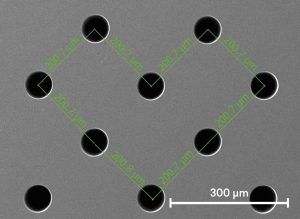
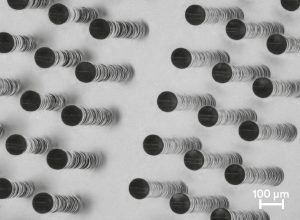
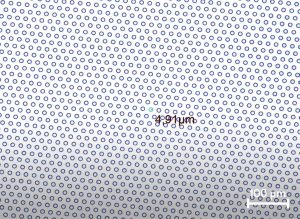
BF33, 0.7 mm, top view

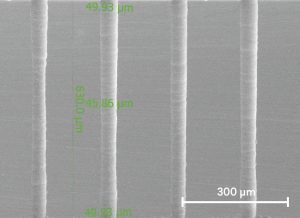
BF33, 0.7 mm, cross-section

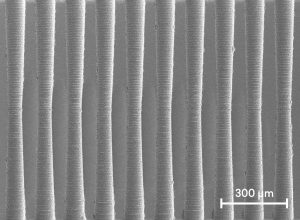
EXG, 0.9 mm, cross-section

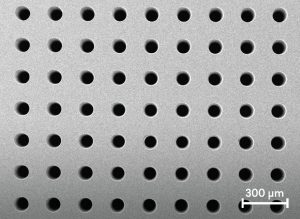
EXG, 0.9 mm, top view

D263, 0.9 mm, D image

Fused silica, 0.5 mm, bottom view, illuminated
While both multi-shot and single-shot methods can be employed, each has its advantages.
Multi-shot methods provide better control and facilitate the creation of high aspect ratio TGVs, while single-shot methods are significantly faster but may face limitations in other specifications.
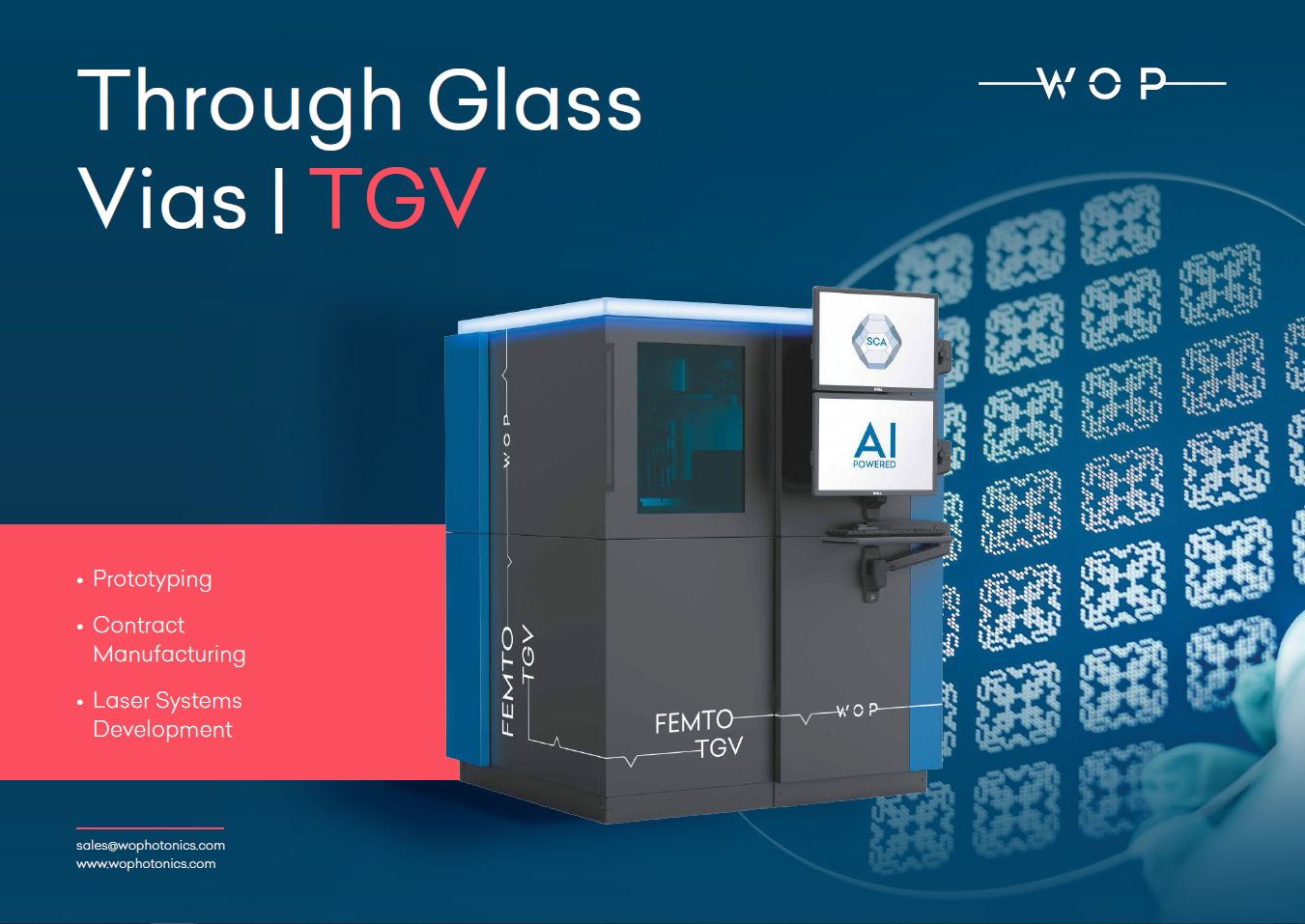
WOP offers prototyping, contract manufacturing and laser system development services for Through Glass Via’s | TGVs.
FemtoTGV is a laser micromachining workstation optimized for Through Glass Vias (TGV) fabrication.
The most used method for glass core substrate processing while creating TGVs is laser fabrication, combined with a wet etch process. Our FemtoTGV is dedicated for laser fabrication part.
WOP has been dedicated to mastering the laser micromachining of glass substrates for over a decade.
And has developed process technologies and equipment that are suitable for high aspect ratio through glass vias across a variety of glass types, diverse via configurations (including hourglass, straight, and tapered vias), and different etching capabilities by utilizing various chemistries.
Meet our team at ECOC 2026 Exhibition in Malaga, September 21-23!
Workshop of Photonics (WOP), a laser micromachining company, has been awarded the prestigious Seal of…
WOP | Workshop of Photonics, also known as Altechna R&D, has launched a project, Preparation…